
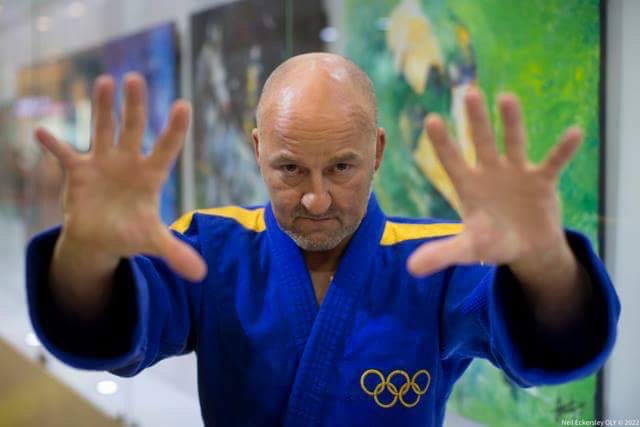
Today’s “In Their Words” session features Olympic bronze medalist Neil Eckersley. Neil was the British judo team captain at the 1984 Summer Olympic Games and is well-respected in the Judo world.
Neil shares his experience as an elite athlete and the hidden challenges of dyslexia. Neil is a powerful example of adversity colliding with mental toughness and a healthy, positive perspective.
JJW: How did you get started in Judo?
ECKERSLEY: I remember walking onto the mat at nine years old. The reason for that is because I was struggling with dyslexia and ADHD. So, as a kid, I was an absolute nightmare.
During the summer holidays, my next-door neighbor basically said, ‘There’s no way that you’re spending the summer holidays driving me mad. Why don’t you go to this taster session at a local Judo club?’ To cut a long story short, I went to the session, and 40-odd years later, I’m still actively involved in the sport.
JJW: When you look back over your athletic career, what are some highlights?
ECKERSLEY: It would start with winning my first-ever regional championship gold medal at nine. As I grew in the sport, I would say the British Masters, the British Open, and then winning European medals and placing in world tournaments. However, the pinnacle was competing in two Olympics and winning a medal. I mean, nothing else tops that.
Every step was important because, without those stages, I wouldn’t have gone to the Olympics. You had to be the best in your category, then the best in the country. You had to be in the top 30 athletes, winning national and international medals, getting places in Europe, and placing in world events. Then, you can finally qualify for the Olympics.
JJW: How many hours a week did you train?
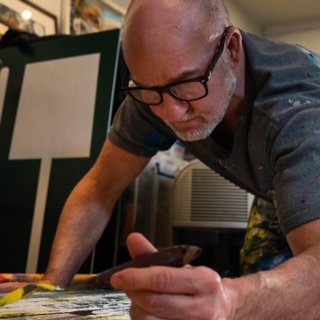
ECKERSLEY: I became a full-time athlete when I got serious about the Olympics. I trained six days a week, between four and five sessions a day. It was very intense training.
I’ve always enjoyed the physical and training elements of our sport. So, when I left school, some of us formed a club and kind of lived with our coach for three or four years. He trained us on a full-time basis.
JJW: What sacrifices did you make to achieve your goals as an athlete?
ECKERSLEY: Just everything you sacrifice, your time. There was very little money involved with it. We had a few sponsors, but not crazy amounts of money. You sacrificed a lot.
I grew up in a working-class family, and suddenly, I was traveling all over the world, so it didn’t seem like a big sacrifice to me. The experience pretty much outweighed the financial gain.
We were getting intense training like no other. Training with that intensity, you need to get the results to justify that commitment. And because I was getting the results, it wasn’t really a sacrifice.
JJW: So you mentioned dyslexia. Did you know you had dyslexia when you were younger?
ECKERSLEY: No, but I thought something was off. It’s strange the way they treated dyslexia in those days. You were put into these classes where I just stuck out like a sore thumb. No disrespect to others struggling with dyslexia, I just felt, ‘What am I doing here? I know I’m intelligent, and I can understand things. I just can’t write.’ So you’re just labeled as a slow learner. I’ve heard it many times, “Neil’s a slow learner.”
JJW: Did dyslexia affect you as an athlete?
ECKERSLEY: As an elite performer, I could mask my dyslexia because I didn’t have to do any writing. I just fill out for a couple of forms here and there.
JJW: At what age did you retire from competing?
ECKERSLEY: I retired at 24. I probably could have competed at another Olympic games, but I thought, ‘Well, I’ve done 2 Olympics; now I want to do something else.’
JJW: Was life after sports challenging?
ECKERSLEY: Not only did I lose my athletic identity, but I was also thrown into a new world outside of sports. It was like going back to school and having to learn to read and write and cope. Looking back at it now, I don’t know how I did it. That’s why mental strength is so important. It took resilience just to do it.
JJW: How did mental strength impact your training and competing?
ECKERSLEY: Mental strength is huge in Judo. I would say it’s 99.9%. Judo is an individual sport, and you have to walk by yourself from the side of the mat to the middle. That is one of the longest journeys. I’ve seen heroes turn to zeroes just walking that couple of meters. It’s that psychology that was one of my strengths. I think it’s because I developed quite a lot of resilience as a kid.
It was our training method that really worked on the psychological side. We were out for hours training. We were probably some of the mentally strongest and mentally prepared athletes out there.
JJW: Did that mental strength help you in your post-athletic career?
ECKERSLEY: Yeah, I wasn’t scared about going to work in engineering after my athletic career. I saw it as another amazing, challenging opportunity, and I’m ready for it. As an athlete, I was training intensely and running up mountains. At the end of the day, you know nothing can be as bad as that. I felt I was well prepared for what the world would bring me.
JJW: After engineering, what career path did you follow?
ECKERSLEY: I returned to university and earned a bachelor’s degree in sports history and sports studies. That was great because I was the first in my family to get a degree, which was an amazing accomplishment because of my dyslexia.
Afterward, I was lucky enough to get an opportunity to go back into coaching. I became the junior men’s national coach for five years and ran a very successful program. A lot of those athletes transitioned into the Olympic program. It was a great opportunity to go back into my sport at a lower level. And it was brilliant because I’ve never worked at the club level, and I actually loved it.
JJW: What would you say to athletes who fell short of their athletic dreams or viewed their career as either a success or failure, depending on their results?
ECKERSLEY: It is what it is, right? It is an experience you had. What you take away from your experience is very valuable. That’s how you can spin it. Even though you may never have achieved the results you wanted, you’ve got so much more to take from the experience. It may sting for a while, but eventually, you’ll be okay and better off for it. You’ll be a better person. It takes a certain mindset to learn from the experience.
JJW: If an athlete came to you and asked, ‘What’s the best advice you could give me?’ What would that advice be?
ECKERSLEY: It would be to be mindful and live in the moment. It’s not all about the results. It’s about the tools you develop that you will take on to the next stage in your life, tools that you will have with you for the rest of your life.
You might think the training’s hard. You might think you know, but, in all fairness, the real world is twice as hard. But don’t worry about it because you have the tools to survive. And not only survive but do really well.
JJW: Thank you, Neil, for sharing your inspiring story.
Neil demonstrates the potency of a positive perspective. Rather than complaining about being away from home, the lack of money, or hard training, Neil focused on the opportunity to travel, the experience of competing at an elite level, and the mental tools he developed throughout his athletic career.
If we maintain a positive framework, every sacrifice leads to a greater reward. The bigger the obstacle, the better the benefit.