• Home
  • About Us
    • Our Story
    • The 6 Pillars of Well-Being
  • Governance Assurance
  • Services
  • Memberships
    • Athlete Well-Being Membership
    • White-Label Athlete Wellbeing Solutions
    • Rugby Match Official Well-Being Membership
    • Football Agents’ Affiliate Membership
  • Ambassadors
  • Testimonials
  • Resources
    • Leadership and Forming Elite Cultures
    • Red Card Gambling Support
    • Crossover Employment Platform
    • First Tee Resource
    • Inscout Network
  • Media
    • Blog
    • News
    • Interviews
    • Podcasts
  • Home
  • About Us
    • Our Story
    • The 6 Pillars of Well-Being
  • Governance Assurance
  • Services
  • Memberships
    • Athlete Well-Being Membership
    • White-Label Athlete Wellbeing Solutions
    • Rugby Match Official Well-Being Membership
    • Football Agents’ Affiliate Membership
  • Ambassadors
  • Testimonials
  • Resources
    • Leadership and Forming Elite Cultures
    • Red Card Gambling Support
    • Crossover Employment Platform
    • First Tee Resource
    • Inscout Network
  • Media
    • Blog
    • News
    • Interviews
    • Podcasts
Contact Us

In Their Words with Samantha Martel Johnson: A Story of Mental Endurance, Identity, and Triumph

  • JJ Weber M.Ed
  • June 30, 2025
  • Interviews

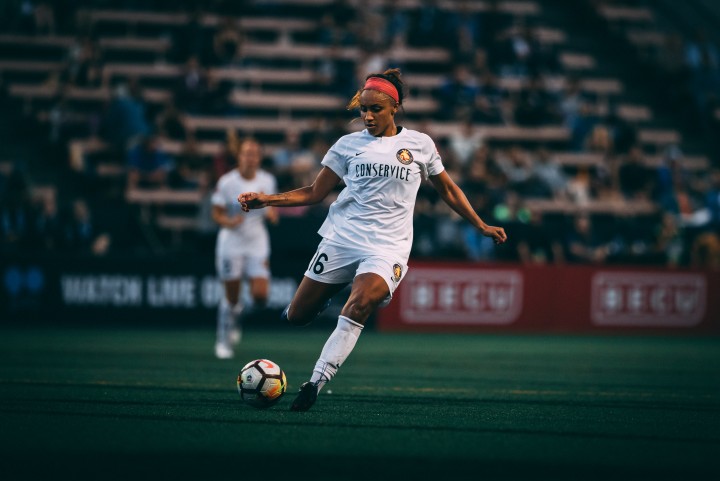
From the outside, Samantha Martel Johnson’s soccer career looks like a dream: youth standout, elite college player, and nearly a decade in the professional ranks. But behind the accolades was a journey marked by emotional adversity, toxic coaching, and moments of deep doubt. In this candid interview with Player Support Services, Samantha opens up about her path from competitive childhood to professional burnout, and how those struggles ultimately shaped her purpose beyond the game. Now retired, she shares how soccer’s hardest lessons helped her create a life-changing program for at-risk youth, turning pain into purpose and sport into service.


JJW: How old were you when you started soccer? Did you enjoy competing when you started playing?

SAMANTHA: I started playing soccer when I was 5. I always had a natural competitiveness. I don’t know where it really came from. I just remember realizing I was different from the other kids in terms of how I looked at training and soccer.

I remember vividly coming home from a local team training session when I was seven or eight years old, and I was upset that the other players weren’t taking the training seriously. I remember the look on my mom’s face. It was like, “An 8-year-old shouldn’t cry over training not being taken seriously.


JJW: When did you realize you wanted to pursue soccer at the highest level?

SAMANTHA: I viewed soccer as something serious, something that was important to me when I was younger. When I was 10, I wrote that I wanted to be a professional soccer player on a fifth-grade project. I don’t think I knew what being a professional soccer player really meant.

Once I entered the more competitive realm at the age of 12, I knew. So, I entered the elite pathway. Once you’re 13 and on the elite pathway, your coaches start talking about college and what’s next, so you are prepared for the future.


JJW: What college did you attend?

SAMANTHA: The University of Southern California.


JJW: How was your college soccer experience?

SAMANTHA: Horrendous, absolutely horrendous. It was such a hard time because I had a terrible coach. I was there from 2009 to 2013. It was just really hard because soccer wasn’t fun.

I’m not saying it’s going to be fun all the time. But it was emotionally draining. When you have to go to training every day and your coach is cursing, yelling at you, making you feel small, and questioning why you’re playing, instead of putting you in a position to improve from a competitive standpoint, that’s different.  I thought soccer shouldn’t be so hard from an emotional and mental standpoint. What we went through was just unbelievable.


JJW: What specific issues with the coach impacted you emotionally?

SAMANTHA: My college coach was extremely demeaning. He was just so mean to us and would curse at us. It was the method that he used, I guess, he was trying to get a rise out of us. It was just so horrifically wrong.

He made us do the most ridiculous things that had nothing to do with soccer, from a physical fitness standpoint. I remember, specifically, that he got mad and made each person hold a soccer ball over their head. We had to stand in a straight line on the end line, facing the pitch, and then jog perfectly together down the pitch. If we weren’t all in unison, we would have to start over, and he was yelling and cursing at us the entire time. I would just wonder, “Why are we doing this?”


JJW: Did the team take any action regarding your coach’s behavior?

SAMANTHA: It was a shitstorm. We told the athletic director. I don’t remember what they did, if anything. I just remember that we had to go through it, and it was horrific; it never changed until the coach left.


JJW: How did you deal with all the emotional chaos? Did you talk to your teammates or family, or did you keep everything inside?

SAMANTHA: I didn’t talk to my family. They wouldn’t fully understand. You have your teammates, you just kind of lean on each other. Everyone’s going through the same stuff.

One important thing for college elite athletes is to have a balance. You have your sport, you have school, and you have your social life. The trick is to make sure you’re trying to excel in those three pillars at the same time. If you can consistently get 2/3 right, then you might be successful.

Most of the time, my soccer pillar was off. I didn’t want to go to training. I didn’t want to see my coach. Sometimes, you need to focus on the other two pillars. You also have your social life, so that’s fun. You have your school pillar, and you know what you must do to get the job done academically. It’s just learning to balance those three aspects of life as you grow into the person you want to become.


JJW: What was your next step after graduating from USC?

SAMANTHA: Since I had such a hard time in college, I didn’t want to play soccer ever again. I hated soccer. However, a few people thought I should put my name in the draft. So I did, but I didn’t get drafted. When I didn’t get drafted, I just thought, “Okay, this is a sign. I don’t have to play soccer again.”

Then, my dad suggested going to an open tryout, since I was still fit. In open tryouts, you usually play an intra-squad game, so the staff can take a look at you.

Thirty seconds into the scrimmage, I tore a ligament in my ankle. My ankle swelled up so much.  I went to the doctor, and he told me I needed surgery. I told him I’m not doing surgery cause I’m never playing soccer again. He’s said, in that case, you could just do rehab. I was fine with that. I just needed to be able to walk. Again, I thought this was another sign that I should never play soccer again.

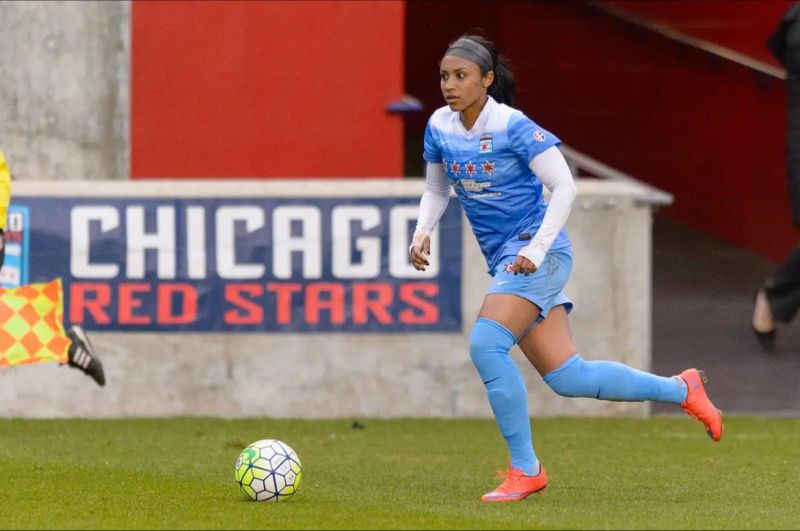
A year later, my best friend at the time, who played at UCLA and was currently playing for the Chicago Red Stars, asked me, “Sam, do you want to come here and play soccer? I was like, “Not really. I don’t really think that I can do it.” Eventually, I decided to go to the open tryout and made the team. Now, here we are 10 years later.

1684865575572


JJW: How long did it take for your ankle to heal?

SAMANTHA: Well over a year, it was really bad. My ankle was pretty swollen. It was not the same size until about two years later. When I went to the open tryout in Chicago, I had to tape my ankle, and I’ve never taped my ankles before.

At least I had strength and some mobility. It wasn’t hard to play on, but it was just annoying that I had to tape it. By the time I was a second-year pro, I had most of my stability and mobility back, so it was fine.


JJW: How was your early experience as a pro?

SAMANTHA: I was just there to be the backup center back, so I thought. I thought it would be great because I knew I was never going to play. I could just train, and I don’t even have the pressure of playing. I can hang out with my friend and chill. I thought it was going to be the best thing ever. I was living in Chicago, a new city. It was a perfect situation because I didn’t really want to play.

Then, my luck, a player got injured in the very first game of the season. Of course they did. And where was that player standing, at center back, my position! Of course, and it’s a season-ending injury. So, now I go from the mindset of, “I’ll never have to play to, I have to actually learn how to be a real center back and quick!” I was wondering if this was a joke. And mind you, I was an attacking player my whole life. Transitioning into a defender is a completely different mindset.

Not only did I have to switch my brain back to playing soccer again, but I also had to change my entire tactical foundation to see the pitch from a center back’s perspective at the highest level and become a critical puzzle piece to the starting 11. Great… I thought sarcastically.


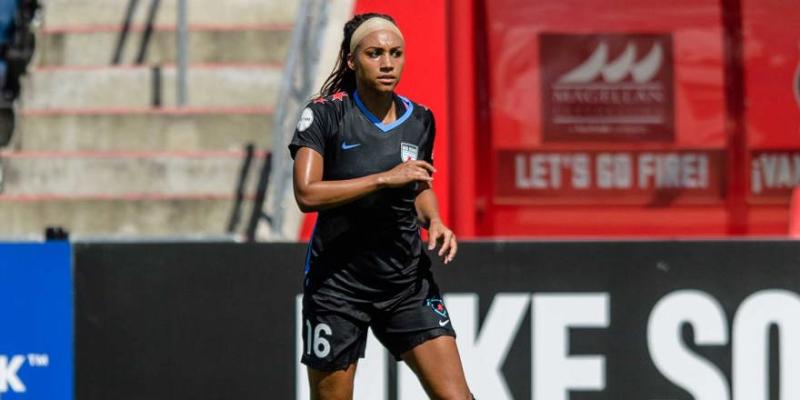
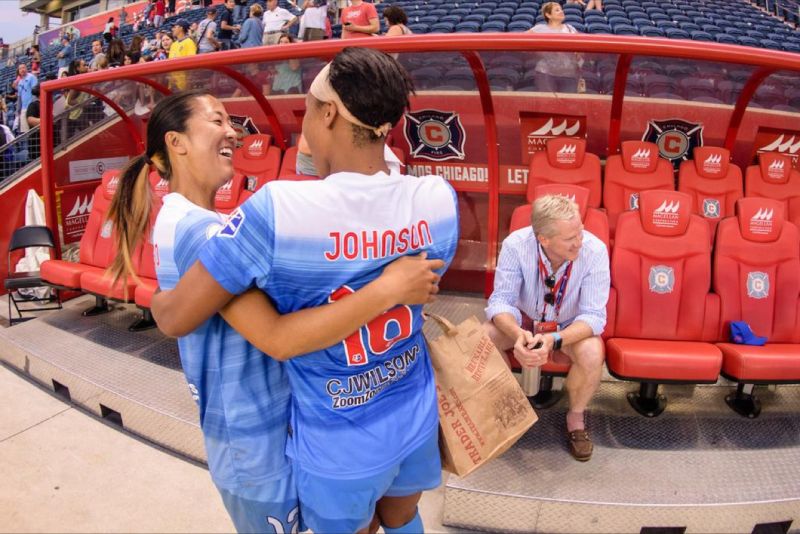
JJW: How was your time playing for the Chicago Red Stars?

SAMANTHA: In Chicago, I had another terrible coaching situation. I thought, “Not this again!”. It was just another mental and emotional abuse situation. My coach would just yell at us in a certain way, like playing psychological warfare on a daily basis. This was supposed to be professional soccer. We’re not children. You don’t have to use fear to get a reaction from grown women. I remember thinking, “Am I really going to go through this again?”

He had all these ridiculous team rules. When we traveled, we couldn’t leave the hotel. It was like we were trapped. Then he would call these random meetings. So, if you did leave, you would be late for the meeting.

Mind you, we’re grown people. We all went through the college system or were at least 21 years old. We had senior players, some who were 33-34years old and had been on the national team at the World Cup. This was a real team with qualified individuals, educated women, and you’re treating us like children. It was so ridiculous. It seems like what a high school coach would do.

I thought, “Why can’t you just develop us as players? I’m literally just here to be better at soccer.” It was not conducive to us improving as players.

Most of the time, he was trying to get a reaction out of us so we could perform in a certain way. He clearly got it wrong from an emotional standpoint, but unfortunately, our team was very good. So, from a performance aspect, it appeared to work, but we were all broken and crying.


JJW: It’s almost as if the team succeeded, despite your coach.

SAMANTHA: I think we were just all in survival mode, to be honest. For him to yell at us and make us run for no reason, we thought, ‘Let’s just do what this man wants us to do so that we can go home in one piece.’


JJW: Was there a reporting system in place in the league at that time?

SAMANTHA: We told the league plenty of times. They didn’t care. This was going on with other teams, too.

It reached the point where the league could no longer ignore what the players were saying. One player said something that triggered an outside investigation. Practically, our whole front office was let go. The commissioner had to go too, because she was sweeping things under the rug.

I feel the NWSL is at a good place now compared to then, so I am happy the players have a real pro-environment. Now, they can focus on getting better as a player and take their career as far as they can.

SM2


JJW: What happened after Chicago?

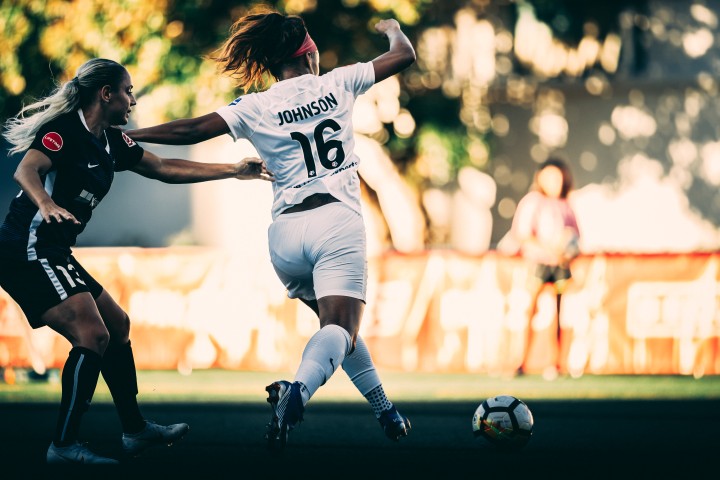
SAMANTHA: In June of 2018, I was traded from Chicago to the Utah Royals. Best birthday present ever! When I got to my new club, I felt free. I was in a new space. I didn’t have to play for “Satan” anymore. But emotionally and mentally, I could not do it. It was just the carryover of stress from my experience in Chicago.

I was okay in the beginning because I was getting used to a new team, a new system, and new people. After half a season, I was loaned out to a team in Australia. When I was in Australia, I remember thinking, “I will not play soccer again after this year. I can’t do it.”

Even though I was physically in a better situation at the Utah Royals, I thought, “Oh my God, I can’t do this anymore.” I remember I slept through training one day in Utah. And I never missed training. I was never late. I wasn’t that type of player. I remember the coaches calling me, thinking something terrible had happened to me. So I went to the facility, and my team was laughing. They asked, “What the hell is wrong with you? You slept through training. Who does that?” I was sort of out of it.

I walked into my coach’s office, and I just sat there. I started crying. I said, “I don’t wanna play soccer. I just started telling my coach I can’t do this.” I don’t even remember referencing Chicago. I think this built up over the years. I rarely showed negative or sad emotions. Probably just came out all in that moment. And I told my coach I would stay until the girls got back from the World Cup, then after that, I am done. So, I retired from soccer in the middle of the season. I was 28, and I didn’t want to play soccer anymore.

I took a year off, and I came back. I felt free. I was just like, “Oh, right. You love this sport. You didn’t like how some of the teams were run, but you still had a love for the sport.” I thought to myself.

But today, I am officially done and very happy with the career I’ve had. It taught me a lot!

1721919553406


JJW: Do you have any advice for today’s female soccer players?

SAMANTHA: I don’t have any specific advice for the next female pro soccer player, but I find one thing interesting now that they have their NIL opportunities in college.

I wonder about girls choosing to go pro instead of going to college. How did they make that decision, and based on what information? I wonder if they consider the salaries or even know what the NWSL salaries are for the majority of players. I think the perspective of being a professional athlete is glamorized.

Since women’s soccer, globally, doesn’t disclose its players’ salaries, people don’t really know how much players earn. I am not saying that the players are poor, but in the NWSL, they earn between $45,000 and $70,000. It’s not like players sign for $50,000 and then re-sign for $100,000 in a year or two. It just doesn’t work like that. That’s just not a realistic salary increase experience. I hope young players and their families ask the right questions so they can make the best informed decision.

I wonder, “Why would you skip college, knowing that the salary trajectory is not there yet, especially if you are a top recruit and could get a scholarship?” So, I wonder why girls think they should skip college and turn pro. Once you turn pro straight out of high school and then decide you want to return to college, you have to pay for it yourself. That would be hard.

The real truth, as you hit the next level, is this. You’re #1 where you came from. Guess who else is #1 where they came from? Everybody in the league. So, you’re not going in there and becoming the face of the team from day one. It may take some time to find your role and develop, which is a natural part of the process. If you get to a team and end up with a starting role, and you thrive straight away, amazing! The next challenge is trying to sustain that for a long, healthy career. Which is challenging, but that’s sports!

Now that the players have access to NIL opportunities in college, women can leverage one or two years in college and then turn pro. They can earn a little money and then have their scholarship honored. Do you really want to pass up a full-ride scholarship so you can sign a contract for $50,000-$70,000? And that’s before taxes!

When you go to college, you’re going to get physically stronger and grow as a person. It’s hard to jump to the professional level when you’re immature physically and emotionally. I can’t even imagine being an 18-year-old player who has just graduated from high school, dealing with the physical demands. It just screams injury.

I think college helps you develop physically, mentally, and emotionally. It helps you become a better player and prepares you to be a pro.


JJW: What are you currently up to?

SAMANTHA: When I played with the Utah Royals, the team owner had a partnership with Western Governors University, which is like an online college. I knew I wanted to pursue a career in education. I was able to earn my master’s degree in curriculum and instruction for free, thanks to Dell Loy Hansen, the owner of my team at the time.

I decided to design a program for at-risk youth. It’s a 12-week self-development curriculum for youth who are in Juvenile Justice programs.

The program is a tool for professionals working with these populations. The self-development program teaches youth soft skills and reshapes their mindset to big picture thinking, rather than dwelling on things that happened in the past. The program works on life planning. I want them to feel that they can accomplish whatever they choose after earning their high school diploma, whether it’s attending college, pursuing a higher education certification, or pursuing a career.

The program helps at-risk individuals clarify what they want to do with their lives or what they want to achieve. I want them to feel confident in the pathway they choose and develop support pathways along the way.

JJW: Do you think your experiences and struggles in soccer influenced your desire to help in the development of at-risk youth?

SAMANTHA: When I look back at my career, I don’t think of it as being horrible. I think of it as being extremely valuable. I can’t believe I got through something like that, but at the same time, I learned so much from my sport, from the people in my sport, what not to do, what to do. I think soccer has taught me how to help people develop, if that makes sense, because my sport helped develop me, and it’s an ongoing process. There is no cap on knowledge or experience. You can always be better.

1695364649643

Samantha Martel Johnson’s story is one of transformation—where personal struggle forged deep resilience and a greater purpose. Her journey through the highs and lows of elite soccer not only shaped her character but ignited a mission to serve others beyond the field. From surviving toxic systems to building systems of support, Samantha proves that purpose can rise from pain, and a career’s end can spark a more meaningful beginning.


PLAYER SUPPORT SERVICES


At Player Support Services, Ltd., we believe stories like Samantha’s must be heard to remind athletes that their value extends far beyond the scoreboard.

PSS 6 Pillars of Athlete Well-Being—Performance, Physical, Emotion, Family, Financial, Post-Career—serve as the foundation for sustained personal and professional growth. These comprehensive well-being pillars help ensure athletes are not only performing but also thriving in sport and life beyond the game.

Need Support or Want to Learn More About Player Support Services?

Email: info@player-support.com

Website: www.player-support.com

Offices: UK and USA

All inquiries are confidential. Whether you’re reaching out for yourself or a teammate, you’re not alone, and help is just a message away.

At Player Support Services, Ltd., we believe every athlete deserves more than a jersey. They deserve a future.

About the Author – JJ Weber, M.Ed.

JJ Weber is Co‑Founder and Director of Sports Injury Management at Player Support Services, Ltd., specializing in the mental aspects of performance, athletic injury, and recovery. JJ brings over 20 years of experience as a performance consultant, working with elite and professional athletes to cultivate mental resilience and peak performance. JJ is a proud member of both the American Association for Sports Psychology and the International Society of Sport Psychology. For questions, contact JJ at: joe@player-support.com

Share Now :

Leave A Comment Cancel reply

Our Partners

123.-24
123.-01
123.-02
123.-30
123.-06
123.-05
123.-10
123.-27
123.-04
123.-09
new 2
new 3
123.-03
123.-12
-03
-01
images-16
Spancer_pROJECT...hhfd-11
123.-07
123.-08
123.-14
new 5
10-removebg-preview
new 4
images-22
images-21
123.-16
images-20
new 6
new 7
Spancer_546456dsf_22_copy_2-removebg-preview
Spancer_546456dsf_22_copy-removebg-preview
Spancer_546456dsf_22_copy_3-removebg-preview
Player Support Services Ltd continues offering our unrivalled range of services for athletes and sports organizations.
Instagram Linkedin

Services

  • Athlete Profiling
  • Branding
  • Business Development
  • Career Transition Coaching
  • Family Support
  • View All

Useful Links

  • About Us
  • Services
  • Our Blog
  • Memberships
  • My Account/Login
  • Contact

About Us

Confidentiality – We protect the interests and identities of our clients.

Copyright © 2026 Player-Support. All Rights Reserved.