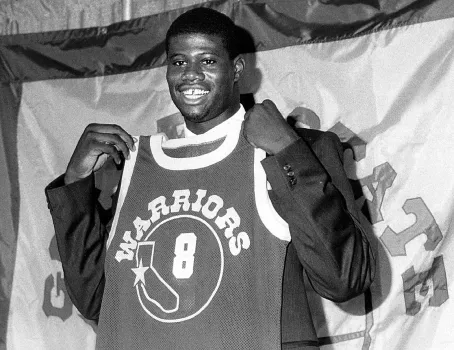
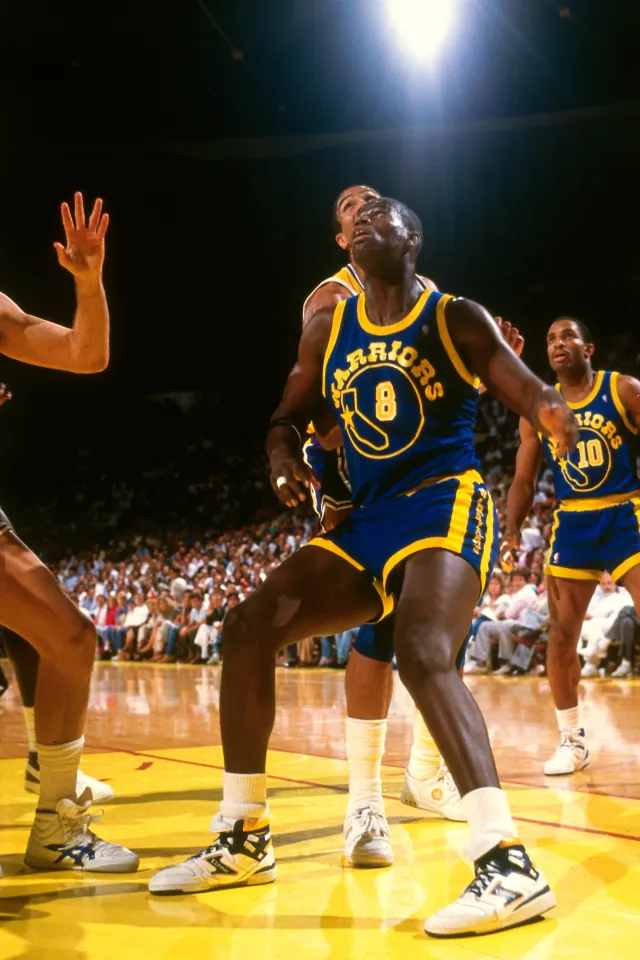

Chris Washburn’s story is one of remarkable talent, hard lessons, and ultimately, redemption. Once a top high school prospect and the No. 3 pick in the 1986 NBA Draft, his early career was overshadowed by personal struggles and addiction. But Washburn’s journey didn’t end there. Instead, he transformed his setbacks into a powerful testimony of resilience, growth, and purpose.
In this exclusive Player Support Services interview, Chris reflects on his rise through the basketball ranks, the challenges that nearly cost him everything, and the strength it took to rebuild his life. Today, he uses his voice and experiences to inspire athletes and remind us all that the greatest victory is not found on the court; it’s found in becoming a champion in life.
.
JJW: As a youth, what sports did you play?
WASHBURN: I wanted to be a NASCAR driver. My dad was big into race cars. That made me interested, but I understood that my size was not gonna let me race cars. So, I started playing football in 4th grade. By 6th grade, I’m 6 feet tall, about 230 lbs., and I’m even bigger than some of my teachers. Since I was a big kid who could mostly outrun most of the running backs, my coach had the great idea of making me a running back.
JJW: At what age did you start playing basketball?
WASHBURN: I started playing basketball in 4th grade. It’s just that football was more of my thing. When I was a 6th grader, I was 6 feet tall. That summer, I grew 7 inches. I went from six feet to 6’7”.
When I got to junior high, I still wanted to be a running back, but the coach said, “No, you’re a wide receiver.” But I couldn’t catch. The quarterback would throw the ball up. I would watch the ball, then the guy getting ready to hit me, then the ball, then the guy about to hit me. By the time the ball got close, I didn’t care about that ball anymore. I’m only watching the guy getting ready to hit me. So, I didn’t do well at football in junior high. By the 8th grade, I stopped playing football.
JJW: How was your high school experience academically, socially, and athletically?
WASHBURN: When I got to high school, I was 6 feet 9 inches in the ninth grade, and my coach said, ‘You’re playing varsity.’ I was better than most of the guys, but I wasn’t going to start. My mom told me not to say anything. She said, ‘It’s gonna work out.’ The night before the first game, the starting center twisted his ankle pretty badly. It pushed me into the starting lineup for the game. The next day, I had 21 points and about 14 rebounds. Eventually, I became an All-American for basketball at that school.
I did get into some trouble in my sophomore year of high school. Because of my size, some of the older guys had the smart idea for me to go into the store to see if I could buy alcohol. Back then, if you saw a 6’10” guy walk into the store, you’re not gonna think he’s 15 years old.
Since I bought it, they let me drink with them. So we were drinking alcohol before a track meet. Everybody’s too drunk to run, and we had to forfeit the whole track meet. When we got home, there was a big uproar. The next morning, everybody involved had to meet with the principal. We got expelled for the rest of the year and had to get attorneys to get back into school.
I finished out the rest of the school year, but when my junior year came around, my mom decided it was time for me to leave Hickory, North Carolina, so she enrolled me in a military prep school in Portsmouth, Virginia. There, I played with top-level players. I ended up being the leading scorer and leading rebounder, and I was only in the 11th grade. I became an All-American at the military school, too, and was looking forward to going back for my senior year. I already transferred once.
Before my senior year, I signed a letter of intent with NC State. For some reason, someone at the military school must have gotten mad that I didn’t sign with the University of Virginia or Virginia Tech, and I was told my services were no longer needed at the military school. I was the number one high school player in the country, and they weren’t allowing me to come back.
Now, all the local high schools had been in session for a little over a month. If I had enrolled in any of those schools, I would have been ineligible to play basketball for the first half of the year. My mom found this small school in Laurinburg, North Carolina. It was a small black school and had a good history of basketball. While I was there, I became an all-American for the third time.
Not only was I a three-time All-American, but I did it at three different schools. At that time, only three other basketball players were 3-time All-Americans: Patrick Ewing, Earl Jones, and Kareem Abdul Jabbar.
JJW: When you were a freshman at NC State, did you start?
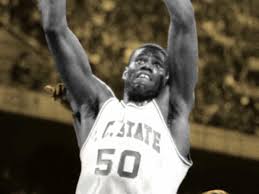
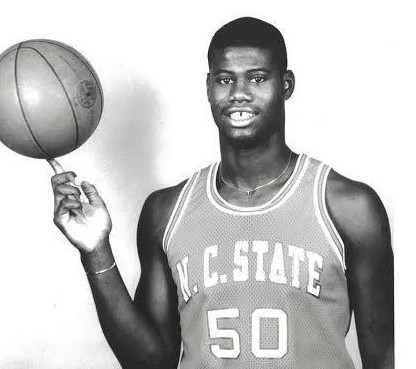
WASHBURN: At NC State, Coach [Jim] Valvano told me I was gonna be a starter because Thurl Bailey just graduated. They needed somebody to come in and fill his position.
When I went to college, I was on my own. I had responsibilities to meet and things I had to do. I wasn’t prepared for that. I made some wrong choices and got a couple of charges, one for assault, one for stealing a friend’s stereo.
We started the season 10-0. Then I ended up getting suspended from the team because of that stereo incident. Coach made me sit on the bench for the rest of the season, and we lost the next seven games.
It’s hard knowing that I could have contributed, but I was on the bench. My teammates knew I could contribute. The team was disappointed in me. I was letting them down. We were looking to go back to the championship like we did in 1983, but I was sitting on the bench. I had to take that humility.
I was one of those guys who, if you give me an inch, I’m gonna take a mile until I get in trouble.
Once, the team traveled to Greece. I thought it would be fun to go into a store and steal some little statues and things. The owner noticed a lot of things were missing from his store. He followed us back to our hotel, got on the bus, and saw the stolen stuff, but nobody admitted to it.
Coach V got wind of it and called a team meeting. He told us whoever did it was going to be suspended from the team, flown back from Greece, and expelled from the University. When he found out it was me, he took the team to the gym and made them run. Instead of me running, he made me sit down and watch them run so they would be mad at me. But after one or two good games, they forgot all about that. Again, it showed me that I could not get in trouble, which was a bad sign for a kid.
JJW: Did you use any drugs or alcohol in college?
WASHBURN: Yeah, everybody smoked a little weed and drank beer. My cocaine habit didn’t come until my sophomore year. Len Bias, who played at the University of Maryland, stopped by my room one night and offered me some crack. I knew nothing about it, but I tried it.
I was a follower, and Len was an All-American in college, a big name going into the NBA draft.
I wanted to play in the NBA, too. I was looking forward to my next college year because I had been suspended in my freshman year. I was playing good during my second year at NC State and wanted to enter the draft after my junior year.
Unfortunately, Len ended up dying right after the NBA draft. Looking back at the night Len stopped by my room, I didn’t realize that one moment of pleasure would stick with me for the next 14 years.
JJW: What happened that night with Len during your sophomore year?
WASHBURN: Len came to my room at three in the morning to hang out and do drugs and left around seven. I had exams early that morning, but I missed all my exams. I had to go hardship and entered the draft because I would have been ineligible for my junior year.
JJW: How was your experience as a rookie in the NBA?
WASHBURN: I was drafted by Golden State with the number three overall pick. George Karl was the head coach, and he played for UNC. There was always a rivalry between UNC and NC State.
Even though he drafted me, Karl would run me just because I played for NC State. That wasn’t fair. You drafted me, but now you penalize me for playing at NC State. When we went to Santa Barbara for my first training camp, I averaged 24 points per game, and he was still running me after games. I didn’t understand why.
When we came back home, I was bored and had nothing to do in the evening. I’m 20 years old. I just signed a big contract, but most of the team were married and would go home after games and practice.
I was semi-depressed and didn’t have anybody to talk to. I had no mentors. So, I started driving around at night to see what’s going on and see where people were hanging out.
When I saw people, I would stop and just talk, ‘Hey, I’m Chris Washburn, I play for the Warriors.’ Eventually, when they saw my car, they would flag it down. We would sit and talk. I didn’t know then, but I was setting the stage for the bad stuff that was about to happen.
Once, I stopped and asked somebody if I could get some crack. I don’t know the streets, so I gave the man $500. I’m sitting in my car, and this man never came back. But I had more money. The next person I saw, I asked, ‘Can you get me some crack. I’m not gonna give you my money until I get something.’ A few minutes later, he gave me a bag and I gave him $300. I rode around the corner and found someone who wanted to do drugs. When we went to their house, I took out my bag, opened it up, and it was a bag of peanuts.
Like I said, I don’t know this stuff. But I’m in this person’s house now, and I have $100 left. That person went and bought some crack right behind the Warriors’ arena. I was up till about 3-4 in the morning getting high that night. After a while, I started doing this daily.
Eventually, I would go to the neighborhood after practice, smoke crack, go home, change clothes, then go back to the hood and smoke more crack until it was time for the next practice.
It started getting to the point that I would be late to practice because the crack was taking over. Now I’m calling the coaches, lying to them, and telling them I took a wrong turn. But actually, I’m sitting right there looking at the damn arena.
I understand now why no players said anything. This team had camaraderie. All these guys have been together for 5-6 years. Now, this new kid is coming for their position. But they knew I had a drug problem and that would prevent me from taking one of their friends’ positions. They would just sit there laughing at me. They wouldn’t say anything.
I remember times we traveled to different states. Some players would sit in first class. The rest of the team would sit back in coach. I would walk up to the first class, go to the bathroom, unplug the smoke detector, and sit there on a 2-hour flight smoking crack the whole time. My teammates would see me sweating, and nobody said anything.
JJW: Did you continue to spiral downward throughout the season?
WASHBURN: Yeah, as soon as I got to the team parking lot, I had to take a hit. By the time I got inside the locker room, it was time to take another hit. I would run into the bathroom, sit on the toilet, pull all my stuff out, and take another hit before I even put my jersey on.
At this point. I’m at odds with the team. When I was on the bench, I wasn’t really watching the game. I was watching the clock count down until I could get high again. At half-time, I would head to the bathroom and smoke more crack.
After the game, I would rush out of the locker room, sometimes before the coach had time to address the team about the game. Once I got into my car, I would take another hit of crack. That would settle me down until I got to the place where I was going to smoke more crack.
Everything I did, I did to myself. I put the drugs into my own body. I don’t fault anybody for that.
No one explained the business side of basketball. I wasn’t saving money. I’d bring drug dealers and prostitutes to games because they were good to me. The only reason they were being nice was because I was the one paying for all the drugs.
I spent $1,500 a day during the week, and $15,000 on the weekend, for about 2 years before that cycle caught up to me. Even though I was earning $87,000 a month when I signed my contract, I eventually ran out of money.
JJW: How long did you play at Golden State?
WASHBURN: About a year and a half. In the middle of my second season, I got a call about 3:00 in the morning from Karl telling me to get my big ass on the plane at such and such time because I’ve been traded to Atlanta.
I had to call a friend of mine from my hometown to pick me up in Atlanta. I told him I was just traded there. He was on crack at that time. So, when he picked me up from the airport, we stopped in the projects, and I smoked crack before I met the Atlanta Hawks owners.
JJW: How long did you play for Atlanta?
WASHBURN: Almost another year and a half. I was about 17 days short of my three-year retirement pension. You get a pension after three years, so I’m just short of that, so I don’t get a pension from the NBA.
But again, I did it to myself. I had a lot of chances to stop. The team sent me to two rehab facilities and had me talking to people who went broke and were homeless, sleeping on the street.
At the time, I was thinking, ‘That’s not me. I have $30,000 in jewelry. I got a Mercedes outside. Big house. I ain’t lost anything.’ Soon, I was going to find out. I was gonna end up being on the poor side because I lost everything.
My house was foreclosed on. At the time, I was breeding rottweilers; they came and took my rottweilers because I hadn’t been home for a week. When I was away, somebody robbed my whole house. I’m talking about a semi-truck that had pulled up and they stayed there for the whole weekend, taking everything out of my house, my clothes, my shoes. They even took the stuff that came with the house, like the trash compactor and the refrigerator, all that stuff. My whole house was cleaned out.
I called the police that night, and they said they were coming in the morning because it wasn’t an emergency at that time. When they came that next morning, I had been up all night smoking crack. When they knocked on my door, I lay on the floor where they couldn’t see me. They walked around the house looking in because they were coming to fill out a report. But because I was smoking crack, I hid and never ended up filing a report.
After that, I moved in with a girlfriend, but the Georgia Bureau of Investigations came to her apartment and told me that I needed to get out of the state.
They’ve been watching me and said it was time for me to go. I wasn’t playing ball because I had been suspended for the whole season. The detectives actually took me to the bus station and said, ‘We don’t care where you go, but you need to leave the state of Georgia.’
I called another girlfriend of mine, who later became my wife, in Dallas, Texas. She told me that she would send me a ticket. Now I’m thinking she was going to get me a plane ticket, but she sent me a bus ticket instead. Just that fast, I went from flying first class to riding buses.
I didn’t make it all the way to Dallas. The bus stopped in a place called Philadelphia, Mississippi. I didn’t have any money, so I went into a store and started stealing. I didn’t have any money. I was hungry. I hadn’t eaten in a couple of days because I was coming off a crack run. I ended up getting caught in Philadelphia, Mississippi, an all-white town. It wasn’t a good time for a black person back then to be in Mississippi. I was locked up in this little jail. It looked like a Mayberry-Andy Griffin type thing.
The police officers there told me, ‘There are no more buses coming tonight. We’re gonna lock you up, and you’re gonna stay overnight. In the morning, you gotta have your ass on that bus.’ The bus was leaving at six in the morning. They kept me locked up until almost 5 am, then shipped me to the bus station.
I finally got to Dallas around eight in the morning, but my girlfriend wasn’t at the bus station because I was a day late. She figured I wasn’t coming. Now I have to find her, but she was at work. So, I had to just stay at the bus station until 5 o’clock until she got out of work and could get me.
Up to this point, I skated by without any consequences. Then, I get jammed up in Houston. I still remember the judge, a nice lady. I was in court for trespassing. She said, ‘I always give a person a chance. Just don’t come back into my courtroom anymore.’ I said, ‘Yes, ma’am. Y’all won’t see me again.’
Forty-eight hours later, I’m back in front of her. I got caught with a crack pipe and $20 piece of crack, and she said, ‘You don’t listen. I have to make an example of you.’ So, she put me in jail and denied me bail. My attorney filed some paperwork to try to get me out. So, the judge gave me a $1,000,000 bond for a $20 piece of crack and a pipe.
After 30 days, she dropped it down to about $200,000. Then, after almost four months in jail, the bond was dropped to $10,000, and I was able to walk out of jail.
But during the whole time I’m in prison, I’m actually getting cleaned. Now, I have four months of being clean under my belt. I ended up being sentenced to three years in 1991 for that drug charge, but because it was less than a 15-year sentence, I was able to get out on a bond and didn’t start serving the sentence until 1994 at the Texas Department of Corrections.
JJW: How long did you spend in prison?
WASHBURN: The first time, I spent about 16 months away on a three-year sentence. I was paroled with the stipulation that I could not leave the state. But when I got out, my name was still good in basketball. So, I left the country and went to Colombia to play.
When I played there, I was calling the parole officer like I was still in the state. Then, she told me I needed to come into the parole office. So, at that point, they found out I was out of the country.
My parole was revoked, but when I came back to the States, I didn’t turn myself in. They found me in a crack house, so I went back to jail for another 12 months.
I just couldn’t get straight. Even when I was in court, waiting to be sentenced, I snuck into the bathroom and smoked crack.
JJW: How were you able to turn your life around?
WASHBURN: Drugs took over my life until I got to the point where I was just sick and tired of being sick and tired. It wasn’t until 2001 or 2002 that I actually started getting clean.
At that point, I was 36 years old. I couldn’t go back to play basketball. So now I had to reinvent my whole life.
I had to rebuild the trust. You know, it’s a painful thing to go back and say sorry. I still want to make amends to people that I once knew and let them know that’s not me now.
Now, I have a couple of businesses. One is a motivational speaking company called CW Enterprises, where you can schedule me to speak at your event. I have other athletes who are also available to speak. Additionally, I operate a transportation service in downtown North Carolina, where we provide transportation from one location to another.
My companies allow me to give back to others. It also shows me that, even though I went through some valleys, I still made it through.
But everything is for a reason. A lot of folks ask me what I would change. I can’t really say I would change anything because if I changed one thing, I wouldn’t have met my wife. I wouldn’t have my children. Things happen for a reason.
I had a good life. It’s just that I was paying more attention to the wrong things. I didn’t realize I had hit the lottery back then, earning $3 million in the NBA. Instead of enjoying that “lottery time,” I made a lot of bad decisions.
JJW: What advice would you give basketball players today?
WASHBURN: Today’s players need to understand that eventually this time ends. You can make a lot of money in a short period of time. You have to remember your career will not last forever, and that this money is supposed to last you the rest of your life.
At one point, the NBA was bringing me back to speak to the rookies coming in. I would tell them to look side to side because next year, the person on either side might not be there. The NBA is just that cutthroat, and it’s something they need to understand.
Some of those guys won’t last long. I would tell the rookies, ‘I had everything that y’all have, and I gave it away in less than three years. I gave it away, not because of my talent, but because of my actions.
JJW: Chris, I want to add something to this conversation. When someone thinks of the Golden State Warriors now, they think of their many recent championships. We label the players on those teams as champions. However, the biggest title one can earn is being a champion in life. Chris, you are a life champion. You earned it. You’ve won.
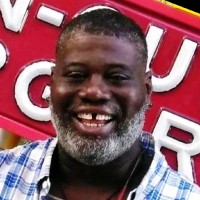
WASHBURN: Thank you. I came out with some scars, but the main thing is I came out and can help others in similar situations.
JJW: I want to thank you, Chris. We tend to judge people by what they did in the past, instead of viewing them as being in the process of their journey. I really appreciate your insight!
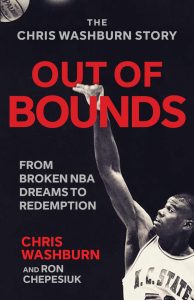
For more about Chris Washburn’s incredible life journey, read his new memoir, “Out of Bounds: From Broken NBA Dreams to Redemption.” In the book, he shares never-before-told stories of his rise, fall, and redemption both on and off the court. The memoir is available now on the CW ENTERPRISES TAC website: https://www.cwenterprisestac.com/
Closing Thoughts
Chris Washburn’s journey reminds us that athletic success alone doesn’t define a life. True victory comes from learning, growing, and finding the strength to rise again after setbacks. His story is proof that even in the face of mistakes and struggles, transformation is possible and that second chances can lead to a deeper kind of success.

At Player Support Services, we believe every athlete deserves the guidance, tools, and support to navigate both the spotlight and the struggles that come with it. From mental health resources and addiction counseling to mentorship and life skills training, PSS helps athletes build the resilience to succeed not only in sports but also in their personal, family, financial, and emotional lives.
Careers end, championships fade, and fame passes—but the lessons, habits, and support systems athletes develop stay with them forever.
Whether it’s handling pressure, managing finances, maintaining healthy relationships, or recovering from setbacks, Player Support Services equips athletes with strategies, resources, and support in every season of their journey.

For more information about Player Support Services, addiction counseling, or to schedule a meeting, email JJ Weber, M.Ed.: joe@player-support.com
JJ is a Co-Founder of Player Support Services and a sports psychology specialist with 20 years of experience working with professional and Olympic athletes worldwide. JJ focuses on athletic peak performance, injury recovery, and holistic well-being on and off the field.